Where to Stay in Chengdu: A Neighborhood-by-Neighborhood Guide
Which part of Chengdu to book, from Taikoo Li to the Kuanzhai alleys, with honest trade-offs on price, noise, metro access and food.
Most Chengdu guides send you to the same three hotels near Chunxi Road and call it done. The travelers actually posting about their trips through 2025 keep circling a more useful question: which part of this city do you want to wake up in? Chengdu is flatter and more spread out than a first map suggests, the metro is genuinely good, and the difference between a stay near the old teahouse lanes and one out in the glassy Hi-Tech Zone is the difference between two very different trips. This is the version I would book, pieced together from recent visitors and the way the food and the metro actually line up.
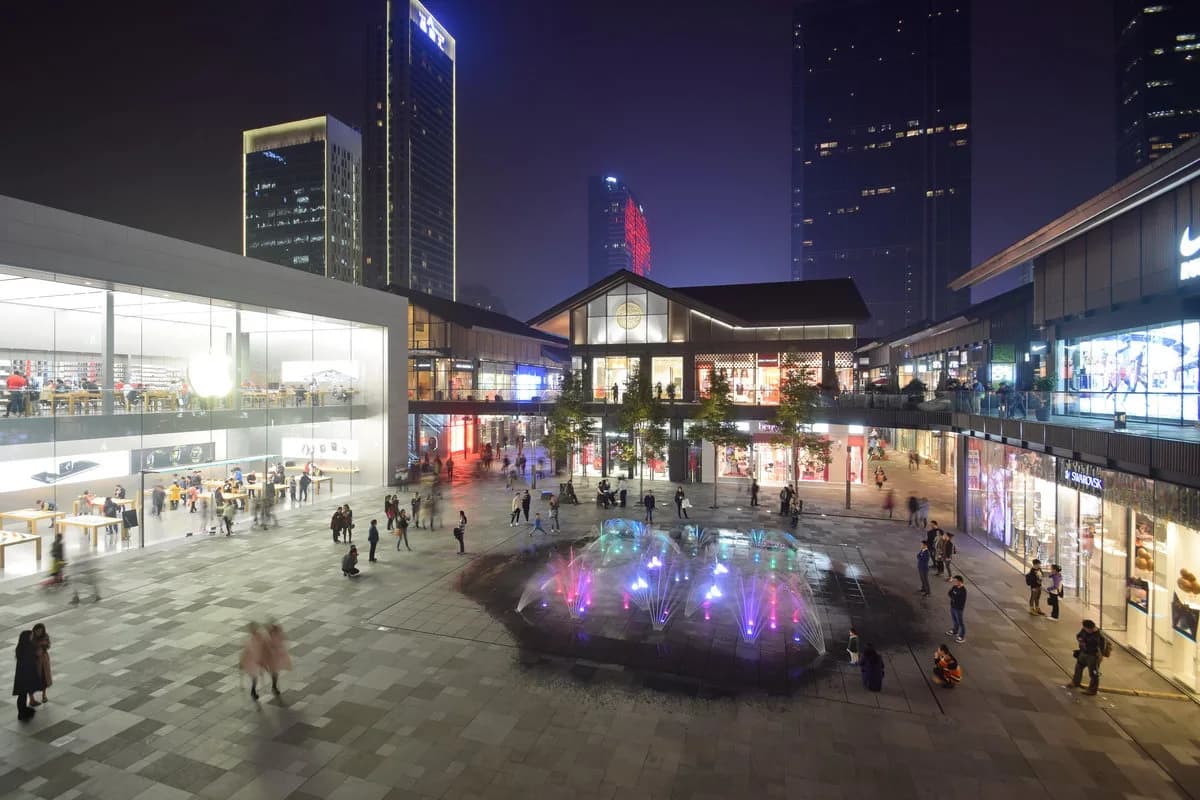
How Chengdu actually lays out
Before picking a hotel, it helps to know how the city is strung together. Chengdu grew in rings around the old center, and almost everything a first visit wants sits inside the first couple of ring roads: Chunxi Road, the Kuanzhai and Jinli lanes, Wuhou Temple, Tianfu Square and Wenshu Monastery. The Research Base of Giant Panda Breeding sits north of the center, and the two high-speed railway stations, Chengdu East and Chengdu South, bracket the east and south.
The metro is what makes this manageable. Lines 2 and 3 cross at Chunxi Road, which is why so many visitors default to that patch. Line 1 runs north to south through Tianfu Square and out to the newer southern districts and the airport lines. Trains run from roughly 6am to 11pm, signage is bilingual, and every rider passes a quick security check on the way in. If your hotel is a short walk from a Line 1, 2 or 3 station, you have solved most of Chengdu's logistics before you have unpacked.
The day trips worth building in
Two or three of Chengdu's best experiences sit just outside the city, and they shape how long you stay.
Three things worth booking
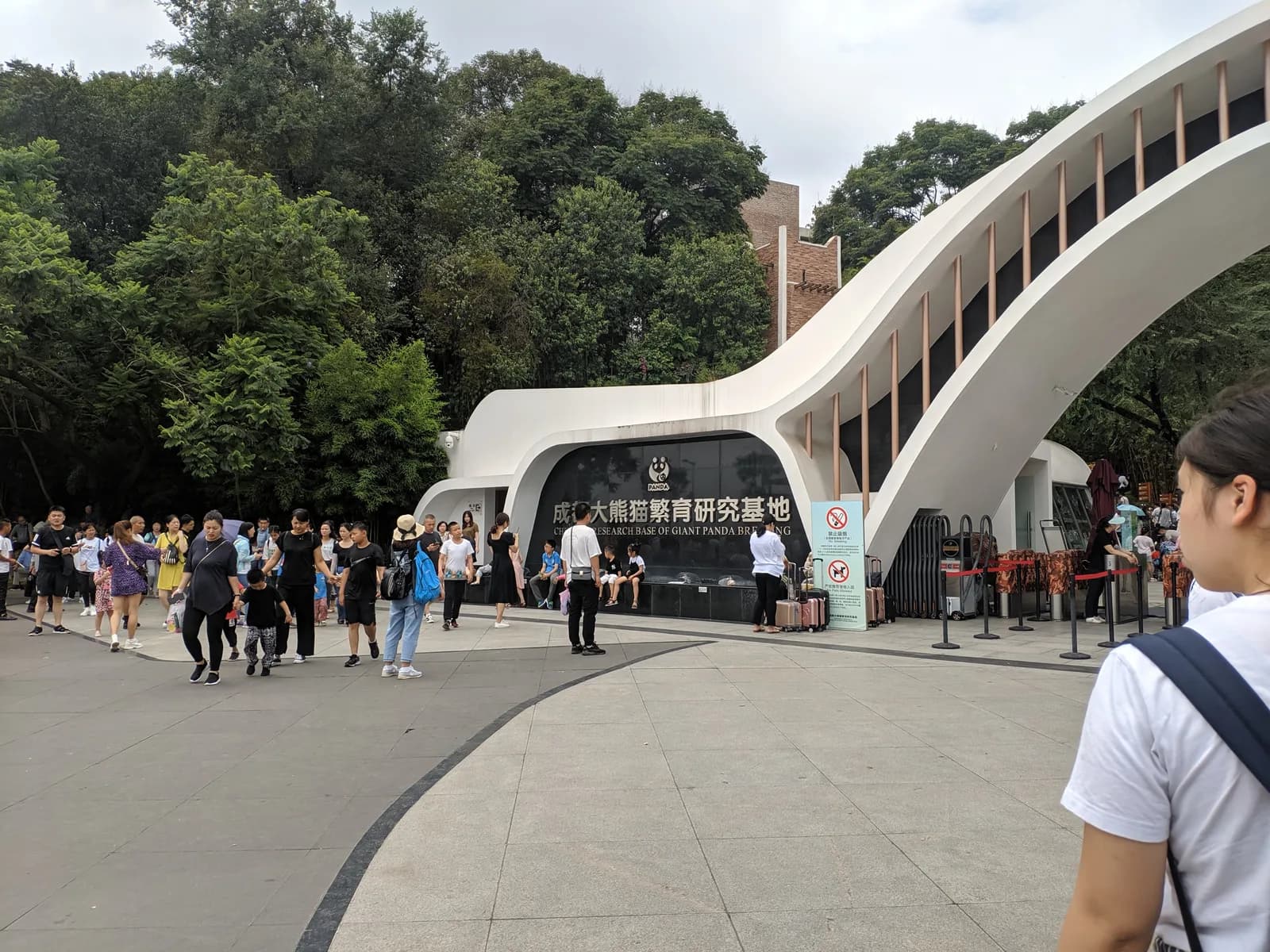 Traveler favourite
Giant Panda Base, early entry
Book online ahead and be at the gate by 7:30am, when the pandas are active and before the tour buses arrive around 9. The one thing nobody in Chengdu skips.
Book this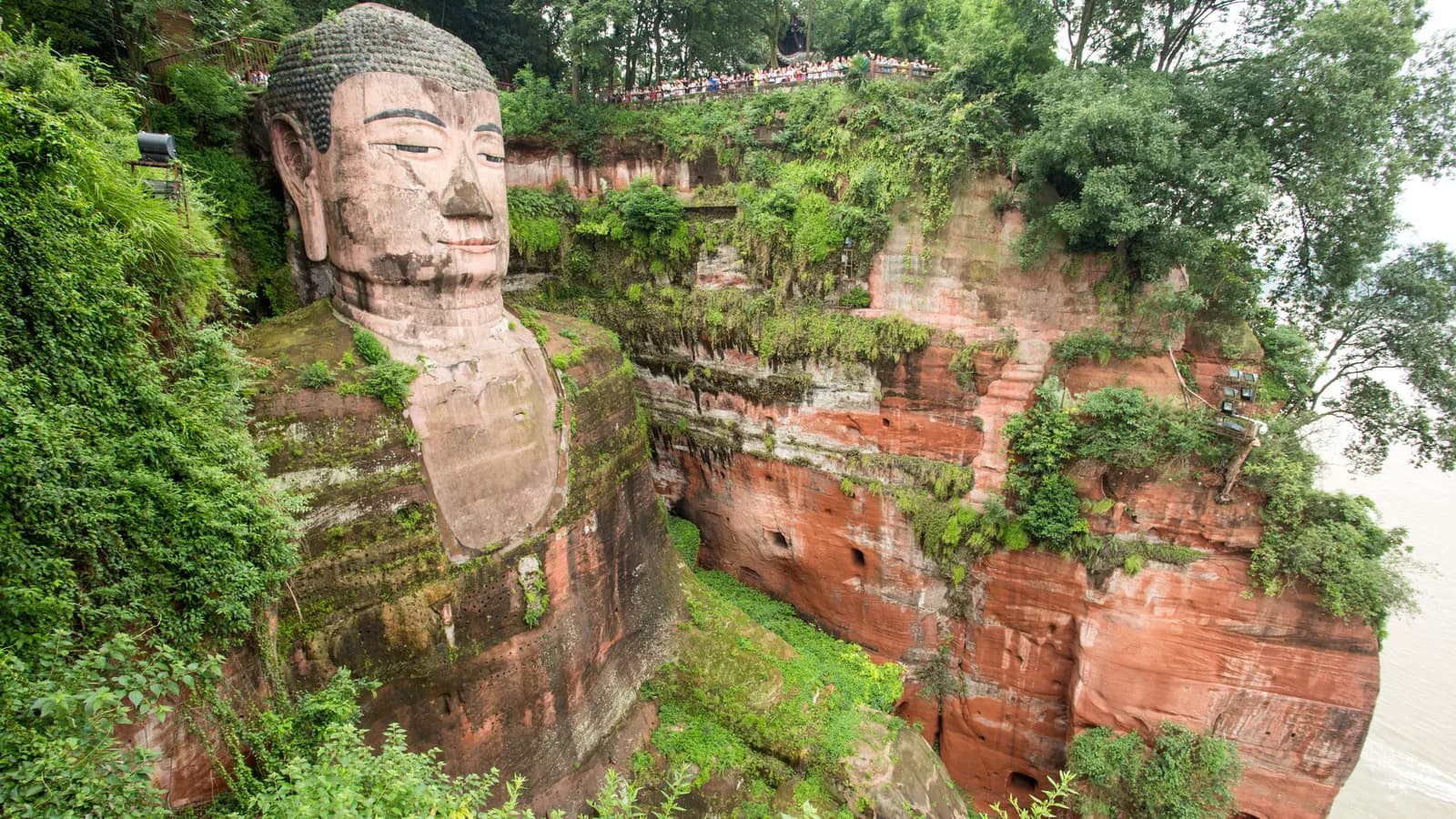 Worth the trek
Leshan Giant Buddha day trip
A 71-meter Tang-dynasty Buddha carved into a riverside cliff, often paired with the pandas on one long day. Take the boat for the view up the full height.
Book this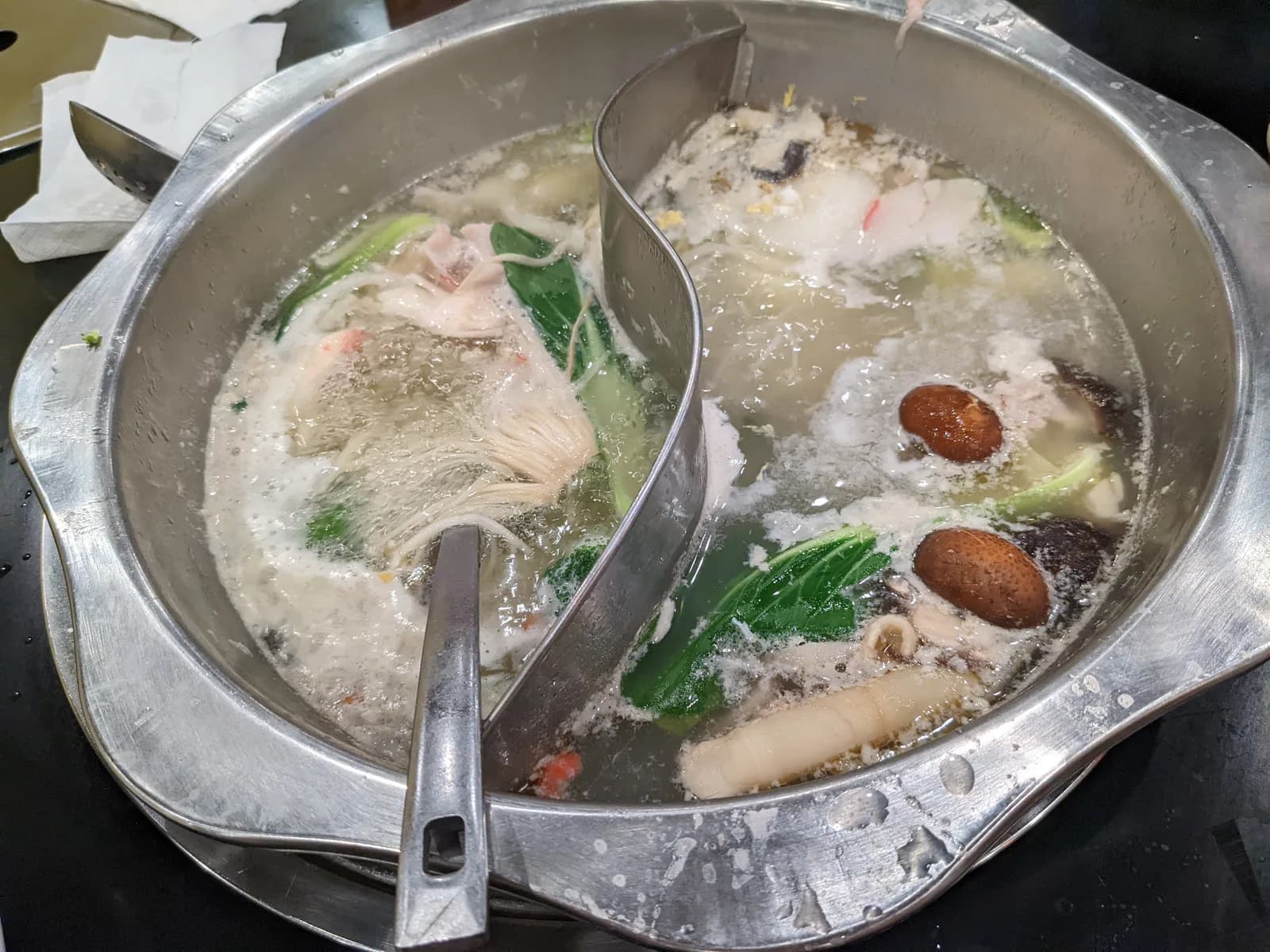 For the food-obsessed
Sichuan hotpot food crawl
The real reason to come. A guided first-night crawl teaches you the map (mala broths, Long Chao Shou wontons, Kuanzhai street food) so you can spend the rest of the trip going back for favourites.
Book thisThe Research Base of Giant Panda Breeding is the one nobody skips, and the single most important tip is about timing. Tickets are about 55 yuan and must be booked online in advance, up to 14 days out, because same-day slots and holidays sell out. Aim to be at the gate when it opens, around 7:30am from March to October and 8am in winter, because the pandas are at their most active before 9:30am and the tour buses pour in around 9. Get there early and head straight for the nurseries, and you get the versions of the photos everyone else is queueing for by mid-morning. Plenty of visitors book a morning panda base tour for the transport and the early entry, though you can do it independently by bus from Chunxi Road.
The Leshan Giant Buddha is the other classic, a 71-meter Tang-dynasty statue carved into a riverside cliff, often paired with the pandas on a long single day. Full-day combined tours run roughly 90 to 220 US dollars per person for the pickup, the four hours with the pandas and the boat or climb at Leshan, and it makes for a big day, around 12 hours door to door. If you would rather not rush both, do the pandas on their own morning and give Leshan its own day by high-speed train from Chengdu East.
For something slower and greener, Mount Qingcheng and the Dujiangyan irrigation works are an easy do-it-yourself day. High-speed trains from Chengduxi station on Line 2 reach Qingchengshan in well under an hour for 10 to 27 yuan, the front-mountain entry is about 90 yuan, and there is a cable car if you would rather not climb the whole thing. Buy the train ticket a day ahead.
Where to stay in Chengdu, neighborhood by neighborhood
Here is the honest menu. I have ordered these from easiest-for-first-timers to most-specialized, with the trade-offs recent travelers keep flagging.
Three places to book in Chengdu
SplurgeThe Temple House
The luxury pick travelers keep naming: a restored Qing-dynasty courtyard wrapped around a quiet modern tower, right inside the Taikoo Li lanes and on top of the metro.
Check availability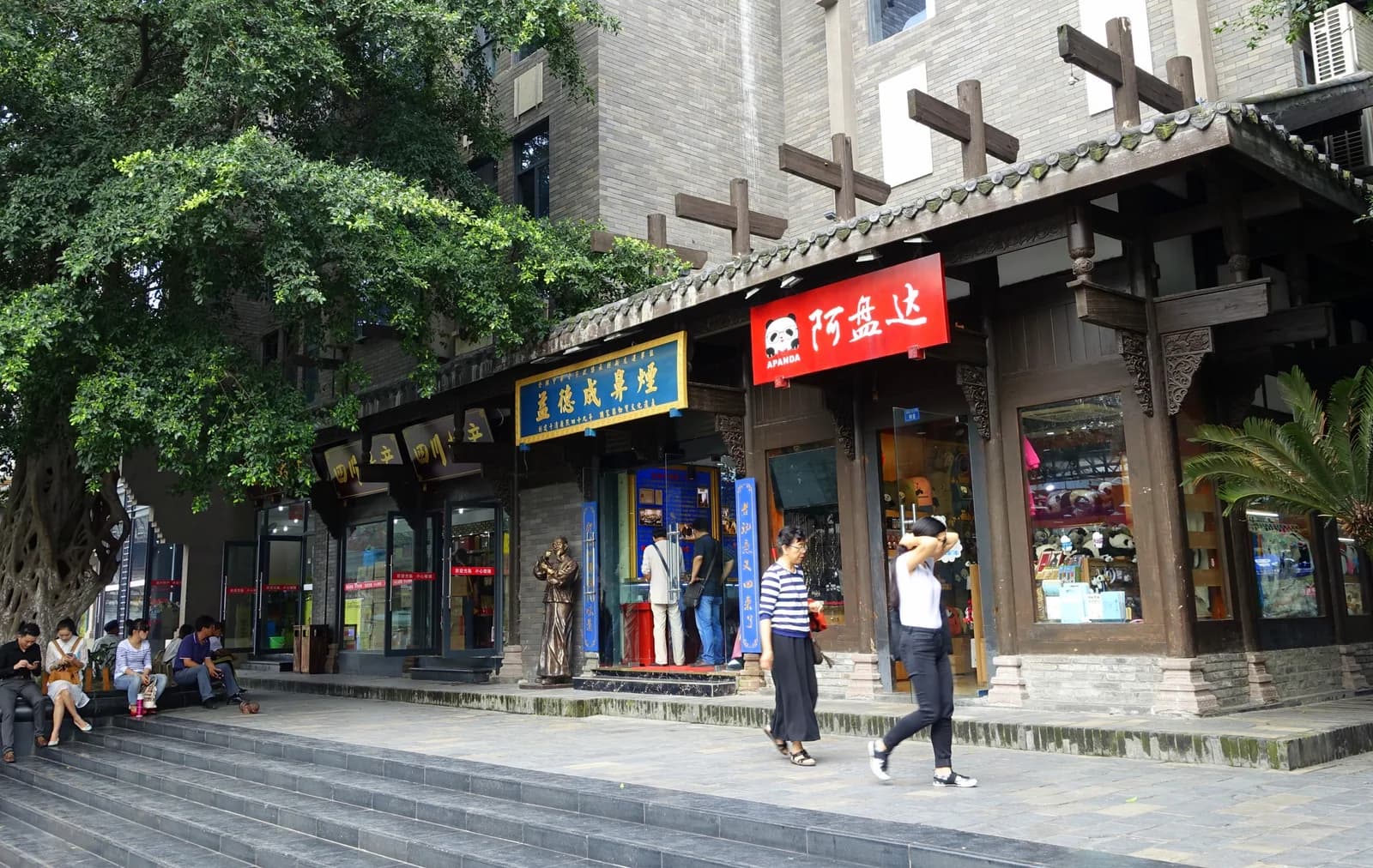 Central & easy
Ji Hotel Chengdu Chunxi Road Taikoo Li
A recent guest called it clean and convenient, right on the Chunxi Road and Taikoo Li action and on top of the metro. Ask for a higher floor, the one consistent note is street noise.
Check availability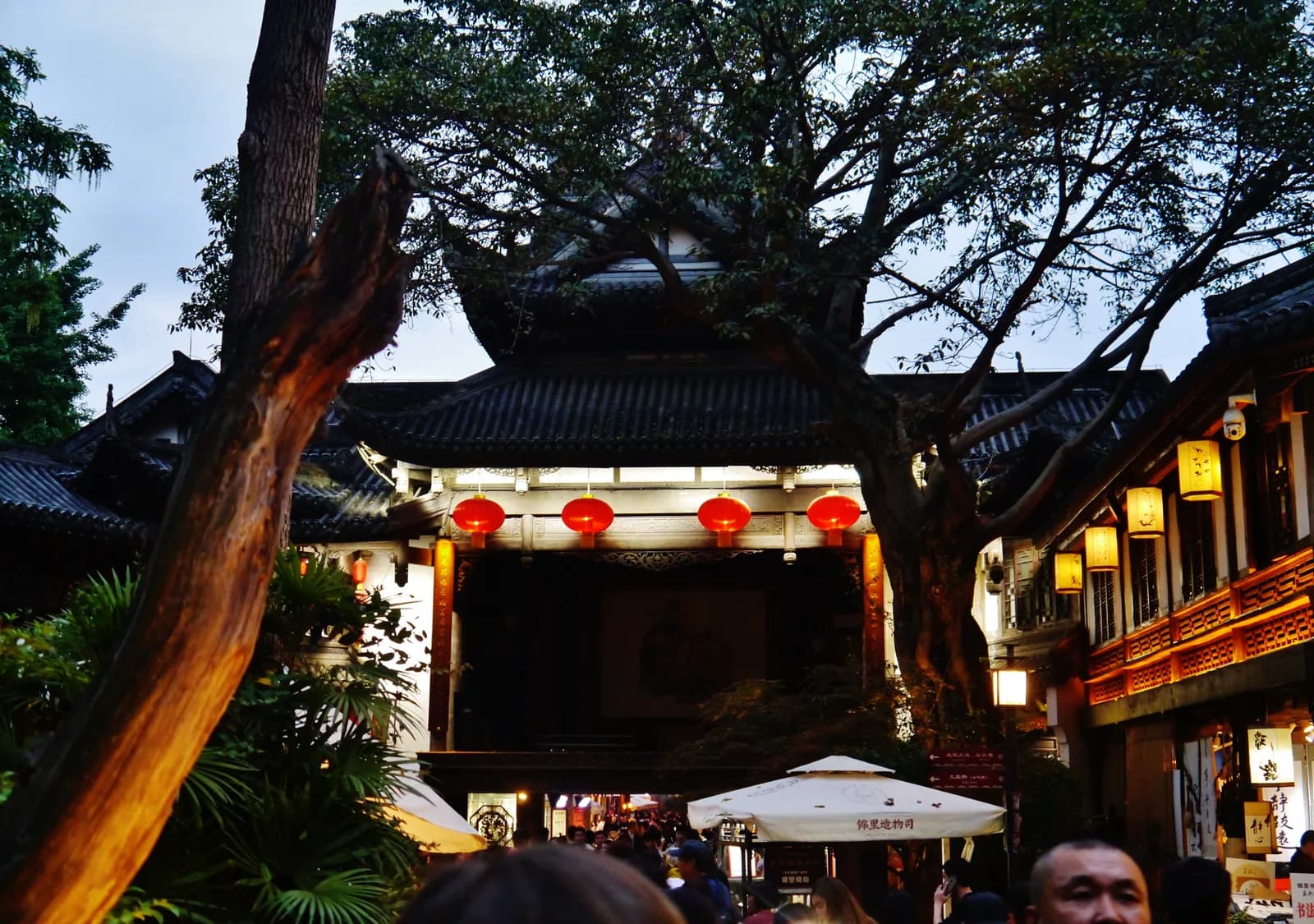 Riverside upscale
Shangri-La Chengdu
The reliable big-name upscale option on the Jin River, with a pool that makes it a favourite for families. A calmer, more polished base than the old-town lanes.
Check availabilityChunxi Road and Taikoo Li is the default, and for good reason. This is the beating center of the city, the Sino-Ocean Taikoo Li complex folding restored lanes and a 1,500-year-old temple into a modern shopping district, with 24-hour food vendors and the Line 2 and 3 interchange underneath. Stay here if it is your first time and you want to step out of the lift into the middle of everything. The catch is noise and density. One recent visitor who stayed at the Ji Hotel by Chunxi Road and Taikoo Li called it clean and convenient but somewhat noisy, so book a higher floor and you will be fine. Browse hotels around Chunxi Road here.
Kuanzhai Alley, the Wide and Narrow Alleys, is where I would send anyone who cares more about atmosphere than convenience. These are 300-year-old stone lanes lined with tea houses, beer gardens and the occasional burst of Sichuan opera, and travelers consistently call this the most atmospheric corner of the city. Stay in the Kuanzhai Alley area if you want to end your night with tea and face-changing opera rather than a mall. It is quieter on hotel stock than Chunxi Road, so book earlier.
Jinli and Wuhou is the history-and-street-food pick, and the most budget-friendly of the central options. Jinli is a lantern-lit heritage lane running beside the 1,800-year-old Wuhou Temple, packed with traditional snacks and, yes, the famous rows of spicy rabbit heads after dark. Stay near Wuhou and Jinli if you want the old-Chengdu postcard on your doorstep and do not mind that it gets genuinely crowded on weekend evenings.
Tianfu Square is the quieter central alternative. It is still dead-center on Line 1, close to Wenshu Monastery and the main railway station, with a good stock of higher-end hotels and noticeably fewer crowds than Chunxi Road. The trade-off travelers note is that some of the hotels are older and the dining leans toward what is inside the malls. Stay at Tianfu Square if you want a calmer base without leaving the middle of the city.
Gaoxin Hi-Tech Zone is the outlier, and only right for a specific traveler. This is the modern southern business district: big international-brand hotels, glossy malls, a wider range of non-Sichuanese food, and the fastest airport access of the bunch. Stay in Gaoxin if you are here for a longer or work-flavored stay and value space and quiet over old-city charm. For a three-day first trip, it is too far from the good stuff.
| Zone | Best for | Vibe | Price tier | Watch out for |
|---|---|---|---|---|
| Chunxi Road / Taikoo Li | First-timers | Buzzy, central, modern-meets-old | Mid | Noise, crowds |
| Kuanzhai Alley | Atmosphere seekers | Historic lanes, tea houses, nightlife | Mid to high | Thin hotel stock |
| Jinli / Wuhou | History and street food on a budget | Lantern-lit heritage | Budget to mid | Weekend crowds |
| Tianfu Square | A quieter central base | Calm, business-central | Mid to high | Older hotels, mall dining |
| Gaoxin Hi-Tech | Longer or work stays | Modern, spacious | Mid to high | Far from old city |
If you want one recommendation to stop the scrolling: first trip, book Chunxi Road or Taikoo Li on a high floor. Second trip, or if you already know you prefer tea houses to shopping malls, book the Kuanzhai lanes. For a splurge, the Temple House inside Taikoo Li is the option travelers keep naming, a restored Qing-dynasty courtyard wrapped around a modern tower.
What you are really here to eat
Let us be honest about why anyone picks Chengdu over a dozen other Chinese cities. It is the food, and the food is why I would build the whole stay around a central base you can walk out of when hunger hits.
Hotpot is the headline. Recent visitors who wanted the experience without a scorched palate point to the Shu Da Xia chain, which runs milder mushroom and tomato broths alongside the classic numbing mala. If mapo tofu is on your list, this is its home city, and the version served in a busy local restaurant like the ones around King Panda (Qiu Jin Xiao Chao) bears little resemblance to the takeaway version most of us grew up on.
Beyond hotpot, keep a running list. Long Chao Shou serves the delicate Chengdu wontons in a slick of chili oil, with a flagship near Chunxi Road. Dan dan noodles are everywhere but best in the small noodle houses off the Kuanzhai and Jinli lanes. Jinli after dark is the place to try the spicy rabbit heads that Sichuan is quietly obsessed with, and Kuanzhai has its own rotisserie-rabbit spot with a line out the door. A short guided Chengdu food tour on your first night is not a bad way to learn the map of it, then spend the rest of the trip returning to whatever you loved.
The reason central beats the Hi-Tech Zone for most people comes down to this. When the best thing you can do at 9pm is wander out for wontons and a beer, you want to be inside the ring, not a 30-minute Didi from it.
Getting there and getting around
Chengdu has two airports, and which one you fly into changes your first hour. Tianfu International (TFU) is the newer, larger hub, further out to the southeast, connected by Metro Line 18 express to Chengdu South Railway Station in about 35 minutes for 10 yuan, with a transfer to Line 1 from there. Shuangliu (CTU) is the older airport, much closer to the center, though the metro needs one transfer to reach the middle and a Didi runs roughly 50 to 80 yuan. From Tianfu, a taxi all the way in can top 280 yuan, so the metro is the smart move. If you are still booking flights, it is worth comparing routes into both Chengdu airports before you commit, since the price gap can be large.
On the ground, the metro plus Didi covers everything. Lines 2 and 3 handle the central sightseeing, Line 1 runs the north-south spine, and Didi fills the gaps for about 1.76 yuan base plus 1.76 per kilometer. Set up WeChat Pay or Alipay before you arrive, because the QR code is how you pay for all of it, metro gates included.
A simple three-day base plan
If you take one thing from all of this, let it be that a central base does the heavy lifting for you. Here is how the pieces fit for a first trip, all of it reachable from a Chunxi Road, Taikoo Li or Kuanzhai hotel.
Day one is the old city on foot. Start slow at Wenshu Monastery, drift through the Kuanzhai alleys for tea in the early afternoon, then walk or take a short Didi to Jinli and Wuhou Temple to eat your way down the lantern-lit lane as it gets dark. Day two belongs to the pandas: gate at 7:15am, nurseries first, back in the center by lunch, then an easy afternoon around Tianfu Square and Taikoo Li with a hotpot dinner you have booked ahead. Day three is your choice of day trip, Leshan by high-speed train if you want the giant Buddha, or Mount Qingcheng if you would rather trade temples for a green mountain. Because you slept in the middle, none of these days starts with a long commute, and that is the whole argument for staying central in one line.
When to go
Chengdu sits in the humid Sichuan basin, and that geography drives the calendar. The clear winners are spring, March to June, and autumn, September to November, when temperatures sit around 15 to 27C, rain eases and the air is at its best. Winter brings haze and low grey skies, summer brings heat and humidity, and while the pandas and the food do not care, your photos and your lungs will. If you have any flexibility, aim for a shoulder-season week and book the panda tickets the moment your dates are fixed.
Practical notes I would tell a friend
- Book the panda base ticket online the day your travel dates lock in, not the night before.
- Set up WeChat Pay or Alipay and link a foreign card before you fly, then test it on something small on arrival.
- Download Amap for navigation and an offline translator, and sort a China eSIM and a VPN before you land rather than after.
- Ask for a high floor at any Chunxi Road or Taikoo Li hotel, since the street noise is the one consistent complaint.
- Keep a little cash as backup even though almost everything is QR, especially for tiny street vendors.
- Pair Jinli and the Kuanzhai alleys on one day, since they are only about 20 minutes apart and both are best in the late afternoon into evening.
- Save hotpot for a night you have nowhere to be the next morning, and go for the split pot if your group has a range of spice tolerances.
- If you only have three days, stay central and treat Gaoxin and the far suburbs as somewhere to pass through, not sleep.
If you have been to Chengdu more recently than the reports I leaned on here, and something has shifted, tell me and I will update this. But if you are booking now, stay central, wake up early for the pandas, and build your evenings around the food. That is the trip the city is best at.
Frequently asked
Which area of Chengdu is best for first-time visitors?
Chunxi Road and the Taikoo Li complex. You are on Metro Lines 2 and 3, walkable to Daci Temple and the biggest concentration of food, and a direct ride from the panda base and both railway stations. The trade-off is crowds and some street noise, so ask for a higher floor.
How many days do you need in Chengdu?
Three to four. One day for the old-city lanes and Chunxi Road, one early morning for the panda base, and one or two for day trips like Leshan or Mount Qingcheng. Slower travelers can happily stretch it to five with the tea houses and food alone.
Is Chengdu easy to get around without Chinese?
The metro is the easy part. Signage and announcements are in English, trains run roughly 6am to 11pm, and Lines 1, 2 and 3 cover almost everything a visitor wants. Above ground you will lean on Didi and a translation app, and downloading Amap plus an offline translator before you arrive makes a real difference.
Do I need cash in Chengdu, or is everything WeChat and Alipay?
QR payment through WeChat Pay or Alipay is dominant and now links to foreign Visa and Mastercard, and it works at the metro gates too. Cash is legally accepted but rarely preferred. Carry a little as backup and set up the apps before your trip.
When is the best time to visit Chengdu?
March to June and September to November. Spring and autumn sit around 15 to 27C with less rain and better air. Chengdu sits in a humid basin, so winter brings haze and summer brings heat, which is why the shoulder seasons win.
How do you visit the Chengdu panda base and avoid the crowds?
Book the ticket online up to 14 days ahead, because same-day and holidays sell out. Be at the gate by about 7:15 to 7:30am when it opens, since the pandas are most active before 9:30am and the tour buses arrive around 9am. Head for the nurseries first.