Where to Stay in Shenzhen: A District-by-District Guide
Which Shenzhen district to book, from Futian CBD to Shekou, with honest trade-offs on border access, food, metro lines and price.
I have not filmed Shenzhen yet, and for years I quietly wrote it off the way most people do: the factory city you pass through on the way to somewhere prettier. The travelers actually posting from there through 2025 tell a different story. A fishing-village-turned-megacity of 17 million where the world's electronics get invented, where the border with Hong Kong is now a 14-minute train ride, and where the food scene runs from old-school Cantonese dim sum to the tea chains that conquered China. Where you sleep decides which of those cities you get. This is the version I would book, pieced together from recent visitor reports and the way the metro, the border and the food actually line up.
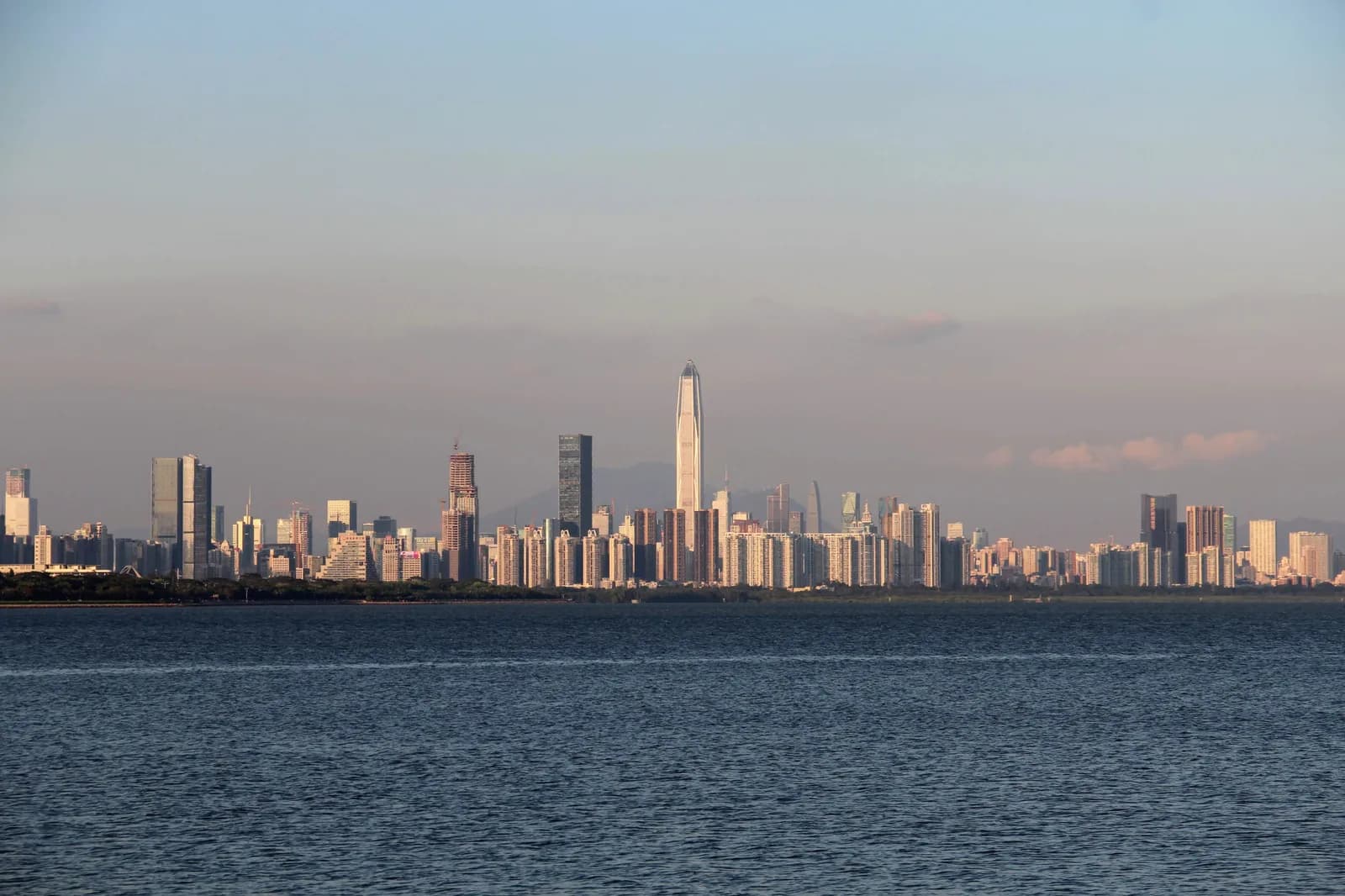
How Shenzhen actually lays out
Shenzhen is a long ribbon of a city pressed against the Hong Kong border, and the three districts that matter to a visitor line up west to east: Nanshan, Futian, Luohu. Futian is the center of gravity, the CBD where the Ping An Finance Centre anchors the skyline and where Futian station puts Hong Kong 14 minutes away by high-speed rail. Luohu, to the east, is the original Shenzhen: older, cheaper, and home to both the classic Luohu border crossing and the Dongmen pedestrian streets. Nanshan, to the west, holds the tech campuses (Tencent, DJI), the Overseas Chinese Town theme parks and OCT Loft, and the expat-friendly waterfront pocket of Shekou.
The metro does the connecting, and it is one of the best in China: cheap, bilingual, and dense enough that almost nothing in this guide sits more than a ten-minute walk from a station. Line 1 runs the east-west spine from Luohu through Futian into Nanshan. Line 11 is the airport express. Lines 4 and 10 feed the Futian border checkpoint. As with Chengdu, the rule is simple: book within a short walk of a useful line and most of your logistics are solved before you unpack.
The things worth building days around
Shenzhen's attractions are stranger and more modern than a typical China itinerary, and that is the appeal.
Three things worth booking
 Gloriously weird
Window of the World
130 miniature world landmarks, from the Eiffel Tower to the pyramids, in one park on Line 1. Go late afternoon and stay for the evening light shows, when it stops feeling kitsch and starts feeling surreal.
Book this Best skyline view
Ping An Finance Centre Free Sky deck
The 116th-floor observation deck of Futian's 599-meter tower, with the whole ribbon of the city and Hong Kong's hills laid out below. Pick a clear day; humidity haze is real here.
Book this For the food-obsessed
Cantonese food crawl
A guided first-night eat through dim sum, Chaoshan oyster omelettes and the Dongmen food streets teaches you the map, so you can spend the rest of the trip going back for favourites.
Book thisHuaqiangbei is the one that has no equivalent anywhere else: about 1.45 square kilometers of multi-floor electronics markets in Futian, where recent visitors describe everything from single resistors to finished drones changing hands across tens of thousands of stalls. SEG Plaza is the classic starting point, components on the lower floors and finished gear higher up, and the consistent advice from people who went in 2024 and 2025 is practical: use your camera's translation mode, test everything before you leave the counter, and treat every sale as final. Even if you buy nothing, an hour wandering the stalls explains modern Shenzhen better than any museum.
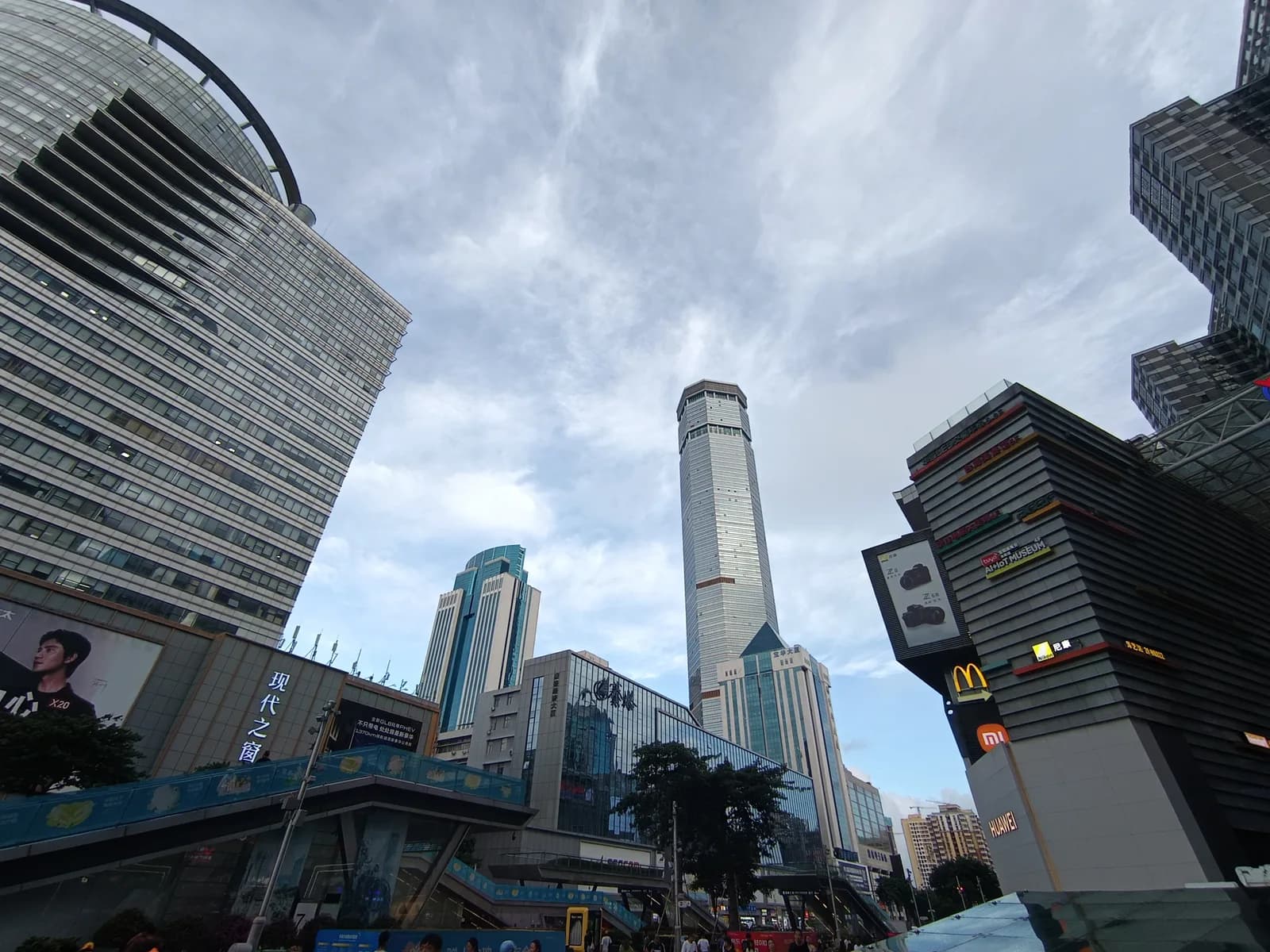
Dafen Oil Painting Village, out in Longgang on Line 3, is the other only-in-Shenzhen stop. It is an urban village where hundreds of working painters produce replicas of famous artworks alongside increasingly serious original work, and travelers keep describing it as far more charming than it sounds: narrow lanes, wet canvases drying against walls, and commissioned portraits you can collect a day later. It pairs well with an evening at Dongmen, one metro line away.
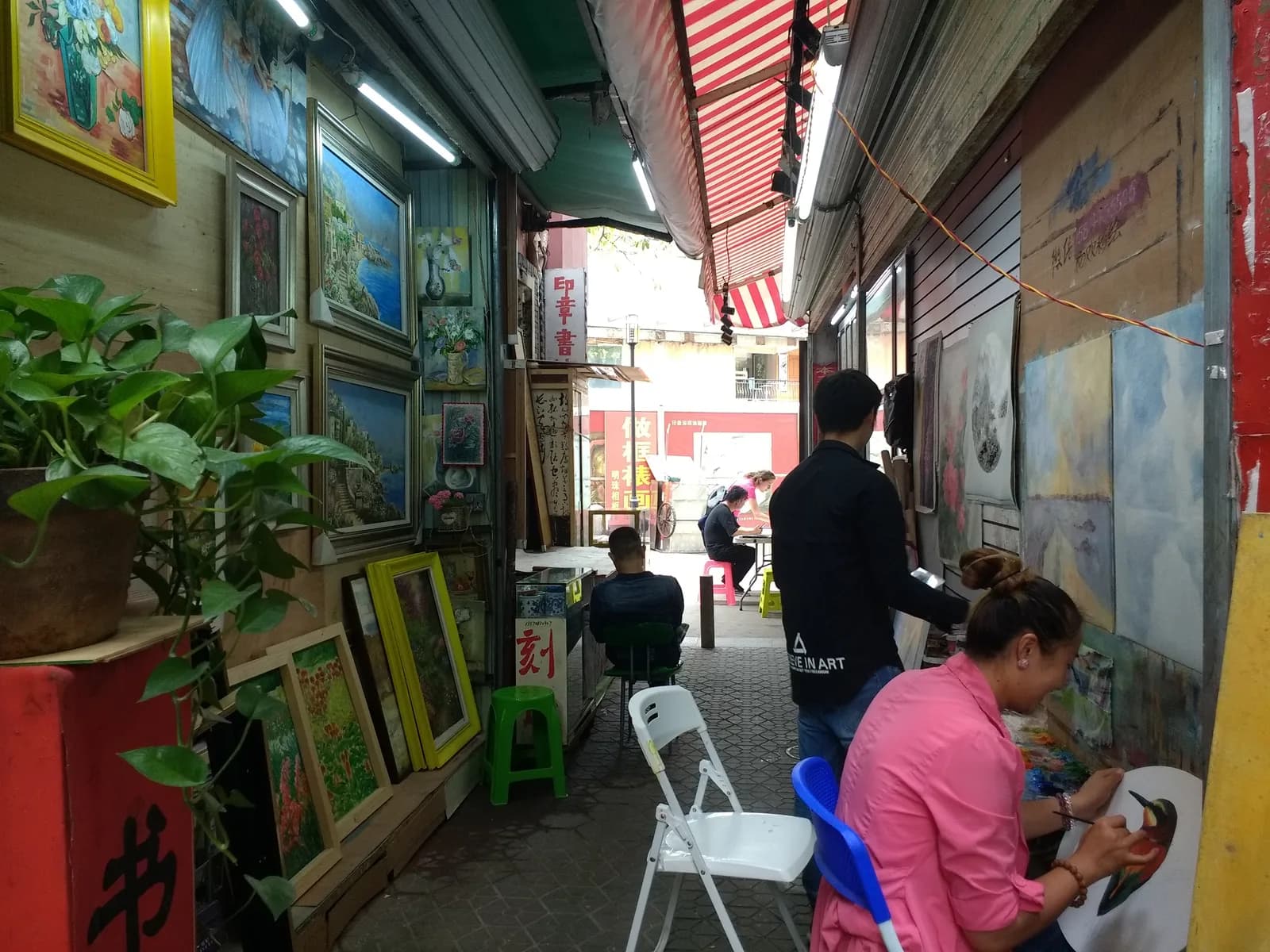
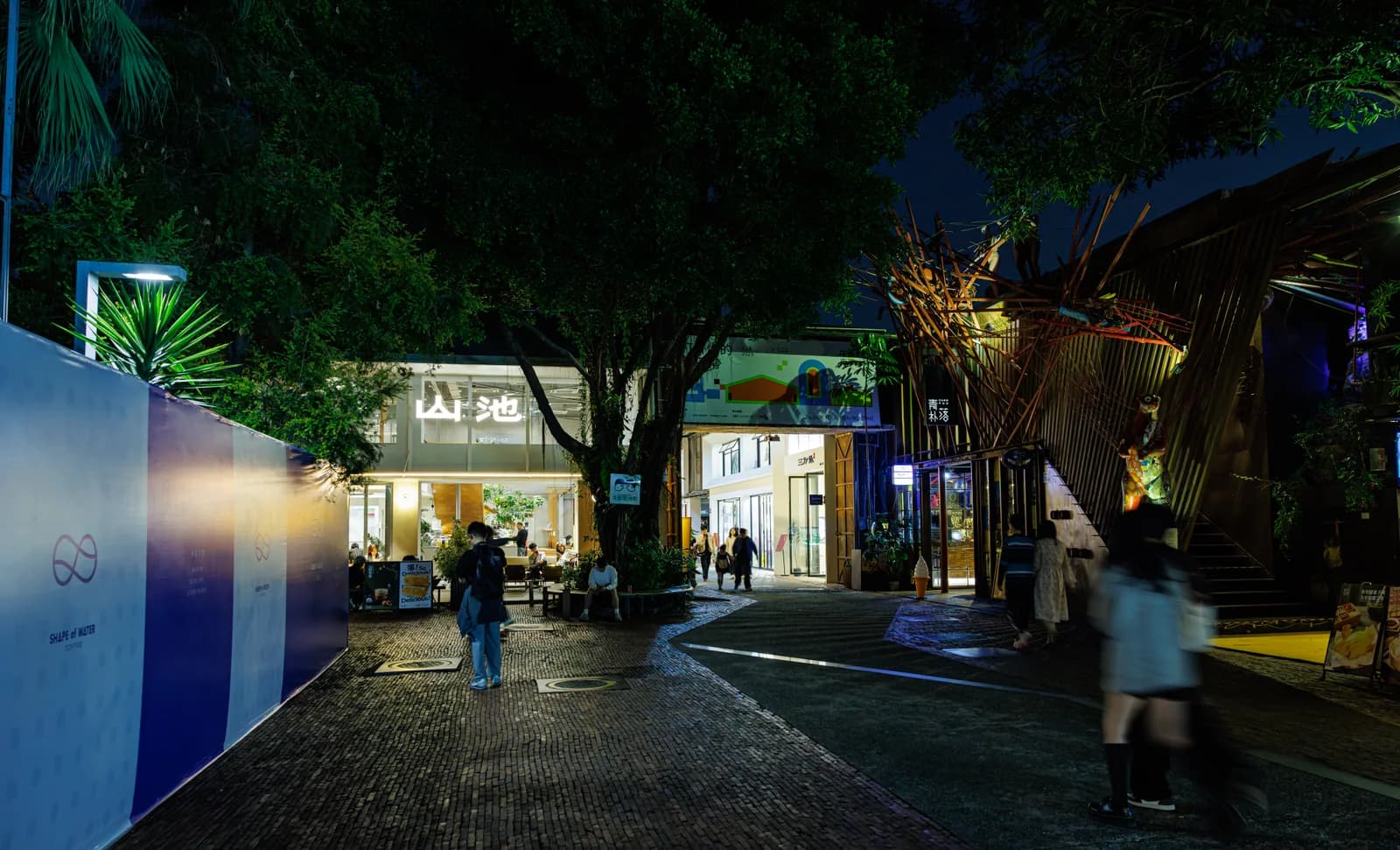
Over in Nanshan, OCT Loft is a former factory complex rebuilt into design studios, bookshops, galleries and some of the city's best coffee, and it is the corner of Shenzhen recent visitors most often call their favourite. It is free, low-key, and the right antidote to a morning in the markets. The nearby Overseas Chinese Town cluster holds the big theme parks, Window of the World and Happy Valley among them, while Shenzhen Bay Park runs a long waterfront promenade where the whole city seems to walk, skate and fly kites at sunset with Hong Kong's hills across the water.
The food is better than Shenzhen's reputation
Shenzhen gets dismissed as a city with no food culture of its own because it is barely forty years old. From what recent travelers and local food writers keep reporting, that framing misses what actually happened: everyone in China moved here and brought their cooking with them.
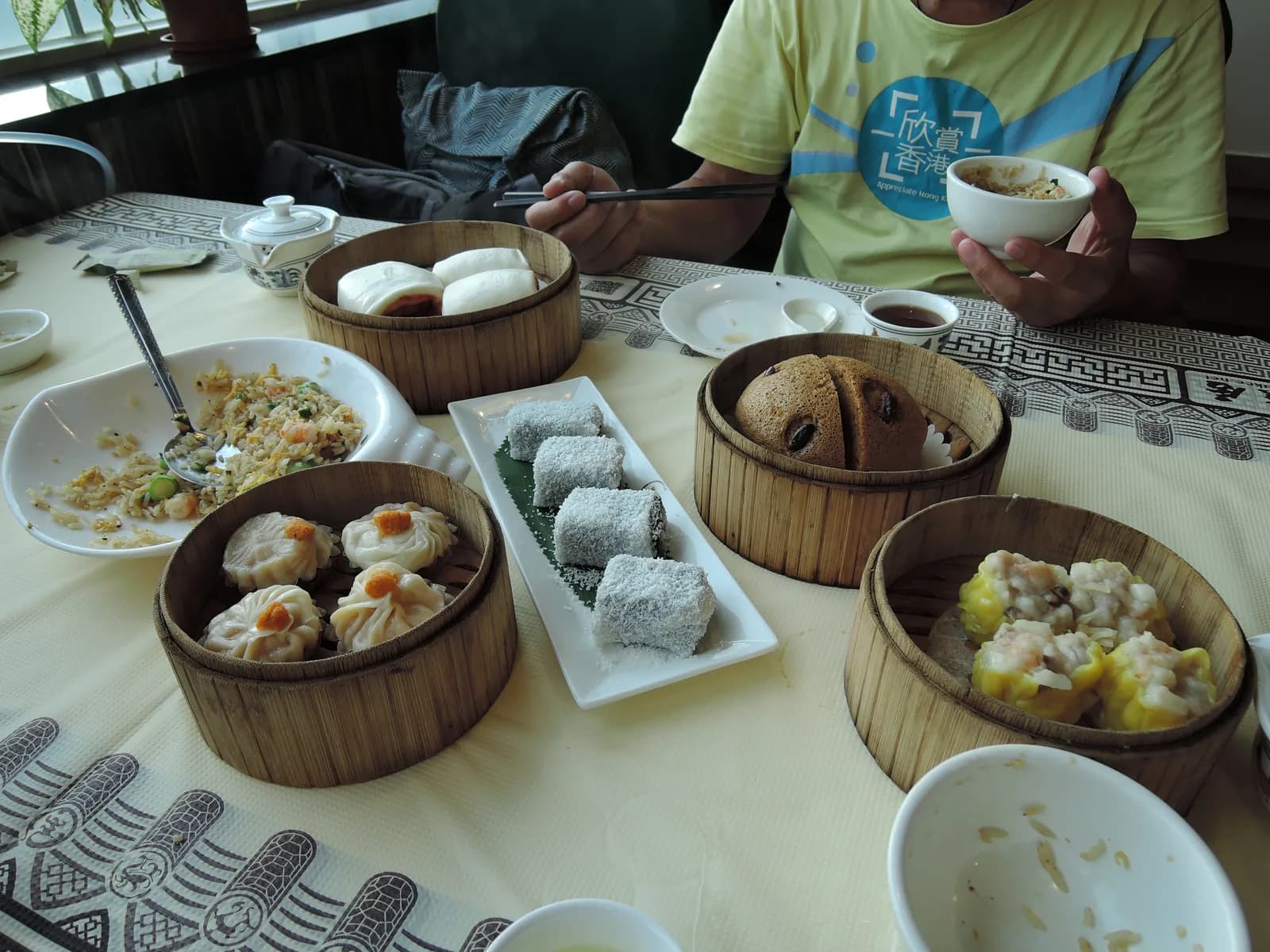
The Cantonese backbone is real. Luohu and the older pockets of Futian are full of morning dim sum houses where the trolleys still matter, and a long, slow round of har gow, siu mai and turnip cake here costs a fraction of what the same meal runs across the border. Chaoshan migrants brought their oyster omelette, crisped in sweet potato starch, and the local twist uses Shajing oysters from Bao'an, the district's own centuries-old oyster beds. Dongmen after dark is the street-food concentrate: grilled squid, curry fish balls, roasted oysters and a crowd that does not thin until late.
Then there is the tea. Shenzhen is ground zero for China's new-wave tea obsession: Nayuki was founded here, and HeyTea's early Dongmen store still draws queues for cheese-foam tea and seasonal fruit slushes. As someone raised between Japanese tea rituals and New Zealand flat whites, I find it genuinely funny that the world's most valuable tea chains grew out of a city with no tea gardens at all. Order one thing from each and pick a side. A guided Shenzhen food tour on the first evening is the efficient way in if the Chinese-only menus feel like a wall.
Where to stay in Shenzhen, district by district
Here is the honest menu, ordered from easiest-for-first-timers to most-specialized, with the trade-offs recent travelers keep flagging.
Three places to book in Shenzhen
 Splurge
Park Hyatt Shenzhen
The Futian luxury pick recent guests keep praising for its pools, sauna and quiet high-floor rooms, in the middle of the CBD skyline and minutes from Futian station's trains to Hong Kong.
Check availability Design pick
Muji Hotel Shenzhen
The first Muji Hotel in the world, 79 pared-back rooms above the UpperHills complex with a Muji Diner downstairs. Recent guests call it spotless and calm; the Japanese minimalism is the point.
Check availability Border classic
Shangri-La Shenzhen
Five minutes on foot from the Luohu crossing and Shenzhen railway station, with an outdoor pool and a revolving top-floor bar. Rooms read a little dated in recent reviews, but the location for a Hong Kong hop is unbeatable.
Check availabilityFutian is the default, and for a first visit I would not overthink it. This is the CBD: the Ping An tower, the big malls, Lianhuashan Park, Huaqiangbei on its northern edge, and Futian station underneath with those 14-minute trains to Hong Kong West Kowloon. The Futian Shangri-La sits directly above the high-speed rail station, which recent guests single out as the killer feature, and the Park Hyatt is the splurge travelers keep naming. Stay in Futian if you want maximum convenience and do not mind that the CBD goes quiet and corporate after office hours.
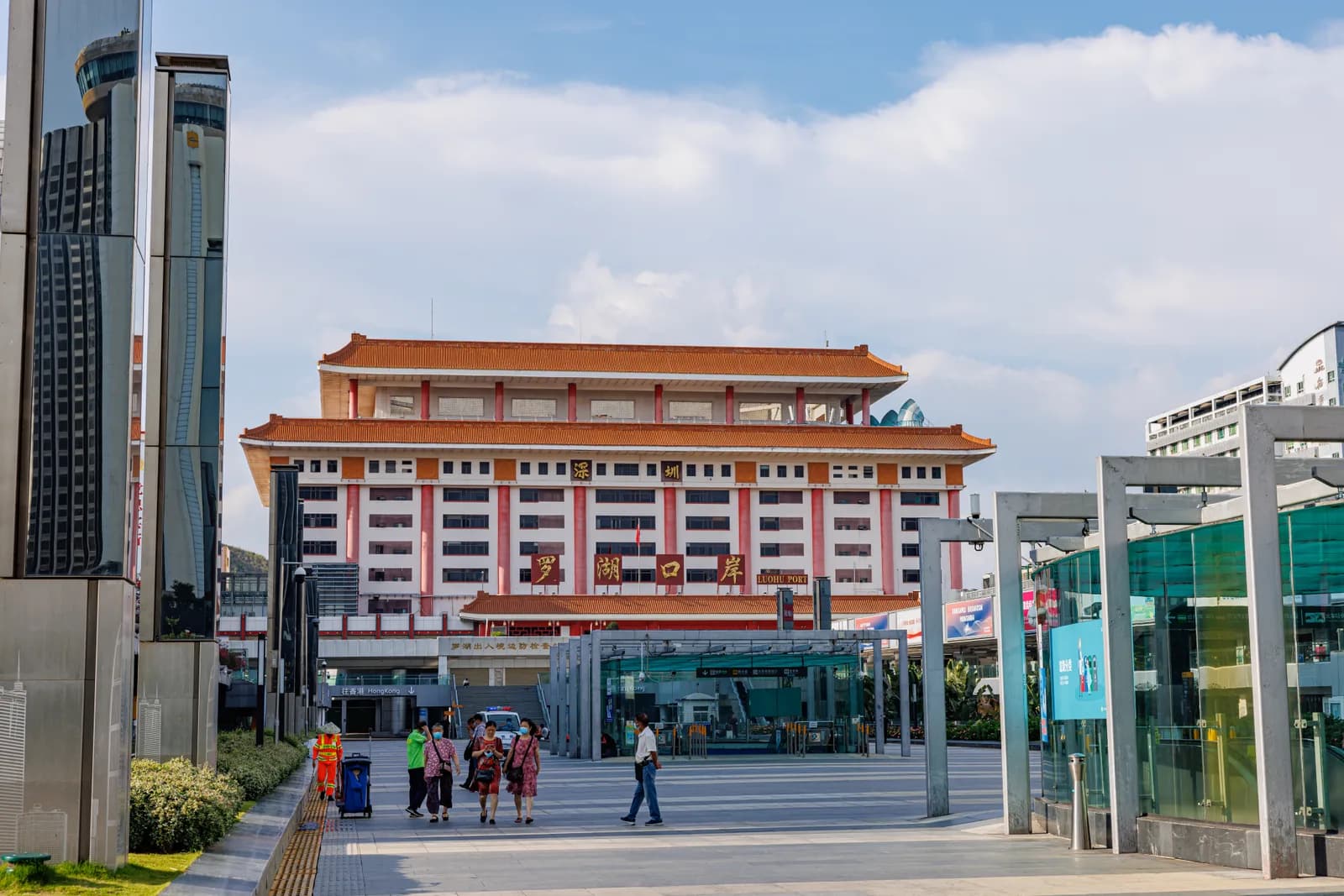
Luohu and Dongmen is the budget-and-appetite pick. This is older Shenzhen: the original border crossing, the Dongmen pedestrian streets, cheap tailors and massage places, and the densest street food in the city. Hotels here run noticeably cheaper than Futian for the same standard. Stay in Luohu if you are crossing at the Luohu checkpoint, shopping hard, or eating your way through Dongmen, and accept that the streetscape is scruffier and the crowds relentless on weekends.
Nanshan and Houhai is where I would send anyone staying longer than a weekend. It is the tech district, greener and newer, with Shenzhen Bay Park's waterfront, the Houhai malls and easy Line 11 access to the airport. The trade-off is distance: you are 30 to 40 minutes by metro from Luohu's food streets. Stay in Nanshan if sea air and evening runs along the bay matter more to you than being central.
Shekou is Nanshan's harbor corner and the long-standing expat base, with the Sea World plaza's international restaurants, western pubs and a ferry terminal running direct boats to Hong Kong and Macau. Stay in Shekou if you want English-friendly ease, are arriving or leaving by ferry, or are traveling with kids who have had enough adventure for one day. It is the least "Chinese megacity" of the options, which is either the point or the problem.
Overseas Chinese Town (OCT) is the leafy in-between: the theme park cluster, OCT Loft's cafes and galleries, and a calmer, almost suburban feel on Line 1 between Futian and the rest of Nanshan. Stay in OCT if your trip is built around Window of the World and Happy Valley, or if you want quiet evenings with the city one metro ride away.
| District | Best for | Vibe | Price tier | Watch out for |
|---|---|---|---|---|
| Futian | First-timers, HK day-trippers | CBD, malls, Huaqiangbei | Mid to high | Quiet, corporate evenings |
| Luohu / Dongmen | Budget, street food, shopping | Older, dense, lively | Budget to mid | Scruffy blocks, weekend crowds |
| Nanshan / Houhai | Longer stays, tech visits | New, green, waterfront | Mid | 30-40 min from Luohu |
| Shekou | Expats, families, ferry users | International, relaxed | Mid | Least local flavour |
| OCT | Theme parks, art crowd | Leafy, low-rise, creative | Mid | Fewer late-night options |
If you want one recommendation to stop the scrolling: first trip, book Futian within walking distance of Futian station, on a high floor. If the trip is really about eating and bargain shopping, book Luohu and spend what you saved at the Dongmen stalls.
Getting there, and the border question
Shenzhen Bao'an International Airport sits northwest of the city, and Metro Line 11 is the answer: around 30 minutes to Futian for under ¥10, running the length of Nanshan on the way. A Didi into the center costs more but stays reasonable outside rush hour. If you are pricing flights, it is worth comparing arrivals into Shenzhen against flying to Hong Kong and crossing by land, because the Hong Kong route is often cheaper for long-haul travelers and the border is genuinely easy now.
Three crossings cover most visitors. The high-speed train from Hong Kong West Kowloon reaches Futian in about 14 to 15 minutes for ¥64–75 second class, with both immigration checks done at West Kowloon before you board. The classic budget route is Hong Kong's East Rail Line to Lo Wu, walking across at Luohu (open 6:30am to midnight) straight onto Metro Line 1. Futian checkpoint, reached from Lok Ma Chau on the same MTR line, runs 6:30am to 10:30pm and lands you on Lines 4 and 10. Queues at all three swell on weekends and Chinese public holidays, which travelers keep learning the hard way.
On paperwork: many visitors now need no visa at all. China's 240-hour visa-free transit covers 55 nationalities entering at Shenzhen's ports, West Kowloon included, provided you exit to a different country or region within ten days. Separately, an expanding list of countries, New Zealand and Japan among them, currently gets 30-day visa-free entry. The rules have changed several times since 2024, so check the official National Immigration Administration list against your passport before booking anything nonrefundable.
A simple three-day base plan
Day one is Futian on foot: a slow dim sum morning, the afternoon lost in Huaqiangbei's markets, then the Free Sky deck an hour before sunset so you get the skyline in daylight and lit up. Day two goes west on Line 1: coffee and galleries at OCT Loft, Window of the World in the late afternoon if the miniature-Eiffel-Tower absurdity appeals, then Shenzhen Bay Park or Sea World in Shekou for the evening. Day three is the flex day: Dafen village in the morning for the painters, Dongmen at night for the food streets, or an early train to Hong Kong if you are border-hopping. Because you slept near a Line 1 or Line 11 station, none of these days starts with a long commute, and that is the whole argument for choosing your district carefully.
When to go
Shenzhen is subtropical, and the calendar splits cleanly. October to December and March to early May bring the comfortable, lower-humidity weather that makes the waterfront parks and market wandering pleasant. Summer, May through September, is hot, wet and heavy, and typhoon season peaks July to September, when a direct hit can close the parks, the ferries and even the border crossings for a day or two. If your dates land in summer, build your days around air-conditioned mornings in the markets and save outdoor Shenzhen for after 5pm.
Practical notes I would tell a friend
- Set up WeChat Pay or Alipay with a foreign card before you fly; the whole city, metro gates included, runs on QR codes.
- Sort a China eSIM and a VPN before you land, not after, since the usual apps do not work without them.
- Download the Shenzhen Metro app or use Alipay's transport code so you are not buying single-journey tokens every ride.
- Cross the border on a weekday morning if you can; weekend and holiday queues at Luohu and Futian are the complaint that never goes away.
- In Huaqiangbei, test every purchase at the counter and assume all sales are final.
- Carry your passport whenever you plan to cross the border or check into a hotel, and remember hotels must register foreign guests.
- Book high floors in Futian and Luohu; street and construction noise come up repeatedly in recent hotel reviews.
- Check the typhoon signal in summer before committing to ferries or theme park tickets, since both shut down in strong weather.
Shenzhen was supposed to be the boring stop, and the recent reports keep insisting otherwise. If you have been more recently than the travelers I leaned on here and something has shifted, tell me and I will update this. And if this trip is part of a bigger China route, my Chengdu district guide covers the food-first version of that city the same way. Book your district for the trip you actually want: Futian for the border and the markets, Luohu for the appetite, Nanshan for the sea air. Then let the tea chains argue over the rest.
Frequently asked
Which area of Shenzhen is best for first-time visitors?
Futian, the central business district. You are on the metro lines that matter, 14 minutes from Hong Kong by high-speed rail via Futian station, walkable to Huaqiangbei's electronics markets, and surrounded by the city's best malls and food. The trade-off is a corporate feel after dark, so build your evenings around Dongmen or Shekou.
Do I need a visa to visit Shenzhen?
Often not. China's 240-hour (10-day) visa-free transit covers travelers from 55 countries arriving at Shenzhen's ports, including the West Kowloon high-speed rail link, as long as you continue to a third country or region. Separately, citizens of dozens of countries, including New Zealand and Japan, currently get 30-day visa-free entry. Rules shift, so check the official list against your passport before you fly.
How do you get from Hong Kong to Shenzhen?
The high-speed train from Hong Kong West Kowloon reaches Futian station in about 14 to 15 minutes for roughly ¥64–75 second class, with immigration done at West Kowloon. The budget route is the Hong Kong MTR East Rail Line to Lo Wu or Lok Ma Chau, then walking across at Luohu or Futian checkpoint straight onto the Shenzhen metro.
Is everything in Shenzhen paid by WeChat and Alipay?
Effectively yes. QR payment dominates everything from metro gates to street stalls, and both apps now link to foreign Visa and Mastercard. Set them up before you arrive, test them on something small on day one, and keep a little cash for the rare holdout vendor.
When is the best time to visit Shenzhen?
October to December and March to early May. That window brings lower humidity and comfortable walking weather. Summer runs hot and sticky, and typhoon season peaks from July to September, when a direct hit can shut the city and the border crossings for a day or two.
How many days do you need in Shenzhen?
Two to three days covers the core: one for Futian and Huaqiangbei, one for Nanshan's OCT Loft, Shenzhen Bay and Shekou, and a flexible day for Dafen village, a theme park or an unhurried food crawl through Dongmen. Hardware shoppers and food-focused travelers can easily fill more.